
From 20 to 1,000 tons – We put metal in top form
Precision under high pressure
Whether deep drawing, punching, or bending, pressing technology transforms sheet metal into precise components. Mechanical and hydraulic presses are used to create contours, realize shapes, and join components.
The processes are divided into forming, separating, and joining. In forming, the material is given its geometry, in separating, exact cuts and contours are created, and in joining, individual parts are permanently connected.
Crucial here is not just the press, but above all the tool. We develop and manufacture solutions for prototypes and small series, tailored to material, geometry, and quantity.
Constructive collaboration from the start:
Forming processes Trending Procedures Surgical procedures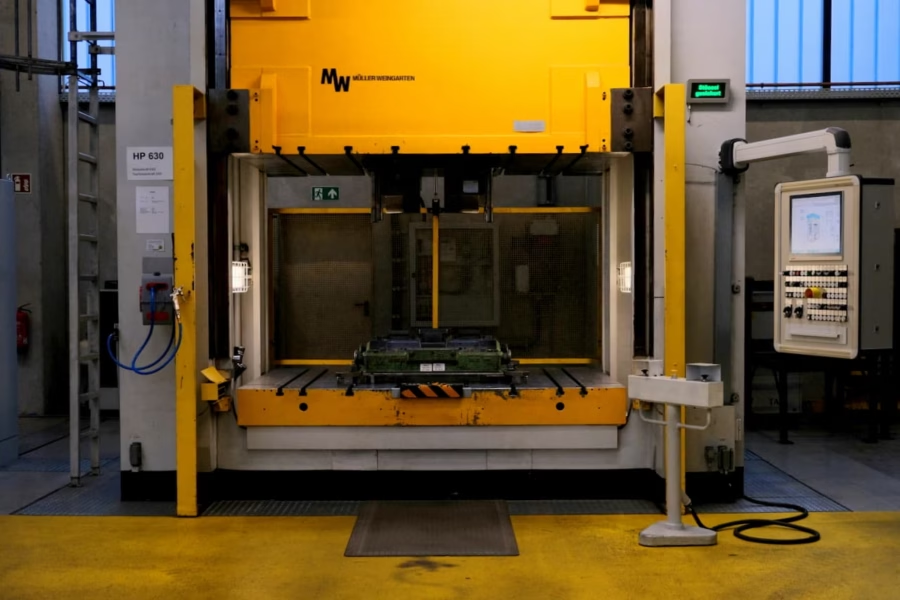
I. Forming Processes Forming without material loss
This is the largest and most widespread group. The goal is to permanently change the shape of a workpiece. A distinction is mainly made between the processing of sheet metal and solid bodies.
- Material efficiency: Unlike machining processes, the material is not removed but plastically deformed, which leads to high resource utilization compared to machining processes.
- Improved component strength Cold working preserves the natural fiber orientation of the metal and compresses it, which increases the mechanical load capacity and stability of the components.
- Cost-effectiveness for complex shapes and high production volumes: Forming technology enables the precise and rapid production of complex geometries (such as deep housings or complex profiles) with consistently high quality – ideal for efficient series production.
Sheet metal forming
- Deep drawing One of the most important processes for producing hollow parts from flat sheet metal blanks. A punch presses the sheet metal into a die. A blank holder prevents wrinkling and regulates the material flow.
- Typical products: Sink, car body parts (doors, fenders), cooking pots.
- Bending / Folding / Edging Used for creating angles and bends in sheet metal parts. In the so-called Press brake bending will the sheet metal be stamped into a V-shaped die (also known in technical jargon as the die pressed (called).
- Typical products: Housings for electrical appliances, vehicle profiles, control cabinets.
- Imprint Here, a structure, pattern, or contour is pressed into the surface of a sheet metal, whereby the sheet metal thickness is selectively changed. A distinction is made between Die-stamping (Material is compressed, e.g. in coins) and the Coining (Pattern visible on both sides).
- Typical products: Coins, medals, car license plates, trim strips.
- Stretching The sheet metal is clamped over a forming tool and stretched until it takes on its contour. This process is used for large, shallowly curved components.
- Typical products: Aircraft skins, large body parts like roofs or hoods.
B. Bulk Forming
Massive, often heated raw parts (blocks, rods) are reshaped here.
- Forging (Die forging): The heated metal blank is placed into a multi-part die. Through one or more powerful blows from the press, the material is forced to completely fill the shape of the cavity in the die. This results in very high component strength.
- Typical products: Crankshafts, connecting rods, wrenches, steering knuckles.
- Extrusion A material block is pressed through a shaping opening (die) with a stamp. This creates long components with a constant cross-section. The process can be carried out cold, warm, or hot.
- Typical products: Aluminum profiles for window frames, racks for steering systems, sleeves.

II. Separating Processes Shaping by material removal
In industrial sheet metal processing, mechanical separation is key to unbeatable cycle times. During forming in the press, integrated cutting and punching operations ensure that outer contours and precise hole patterns are created in just a few work steps. By using high-strength punching tools, the industry achieves mechanical separation characterized by extreme repeatability and clean cut surfaces.
This process shows its strengths particularly with higher production volumes, as constant quality is achieved in a short time with a designed tool. The cut edges are created without thermal influence on the material and offer a clean basis for subsequent forming or assembly steps.
In prototype construction, we also rely on laser cutting. Since contours often change in the early stages of development and cutting tools are expensive, the laser process allows for quick and cost-effective adaptation of geometries.
Your advantage with our service:
- Maximum productivity in series production: By integrating stamping and cutting operations directly into the press cycle, we achieve maximum output rates at minimal unit costs.
- Gentle material separation: Since the separation process is purely mechanical, no heat-affected zones are created—the material properties remain consistently stable throughout the entire component up to the edge.
- Integrated Contour Diversity Modern progressive dies allow us to create complex interior and exterior contours simultaneously with the forming process, making additional process steps unnecessary.
A. Stamping & Cutting
This is the supercategory for cutting sheet metal primarily with a tool consisting of a punch and die. A distinction is made:
- Lacquer The punched-out inner part is waste (slugs), the outer part is the desired workpiece.
- Cut The punched-out part is the desired workpiece.
- Typical products: Washers, boards for further processing, perforated sheets.
Fine cutting is a high-precision variant of punching. The use of circular teeth and counter-pressure creates extremely clean, crack-free, and smooth cut surfaces that often require no further processing.
- Typical products: Gears for transmissions, locking parts in locks, levers for precision mechanics.
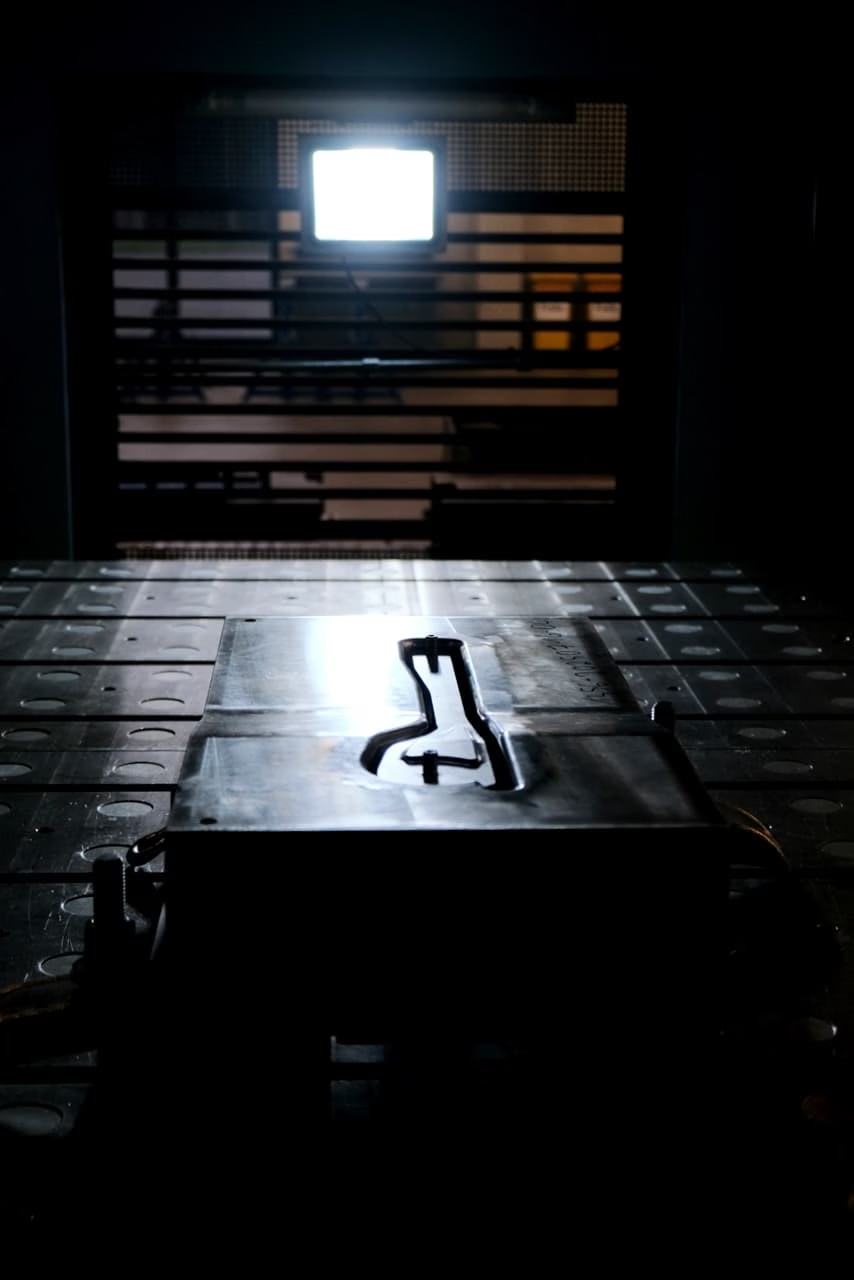
III. Joining Processes Connecting components
In modern sheet metal processing, joining within the pressing process is key to maximum efficiency. Instead of laboriously welding components in a separate step, we use the targeted force of our presses to mechanically connect materials. Whether through clinching, self-piercing riveting, or the precise insertion of functional elements, we create inseparable connections directly in the forming process.
This cold joining process offers the invaluable advantage of avoiding thermal stress in the material. The microstructure is preserved, surfaces are protected, and the dimensional accuracy of the assembly is absolutely guaranteed by the precise tool guidance in the press. This results in highly resilient connections that are technologically and economically convincing.
Your advantage with our service:
- Material-neutral connections Mechanical joining allows us to safely connect a wide variety of materials (e.g., aluminum with steel) that are otherwise difficult to weld conventionally.
- Defect-free precision: Since no heat is introduced, no thermal stresses or surface damage occur – your components remain perfectly shaped.
- Integrated Efficiency: By adding directly in the press stroke, additional work steps and cycle times are eliminated, which significantly increases the cost-effectiveness of your series production.
The following options exist for joining components using a press:
-
Press fitting
A proven joining method in which a component is pressed into another with a defined force. This creates a highly durable, friction-locked connection (press fit) that guarantees maximum stability and long-lasting reliability in use without additional aids or thermal stress.
- Typical applications: Pressing ball bearings into housings, pressing in bolts or bushings.
-
Clinching (Asserting)
A modern cold joining method for permanently joining sheet metal without filler materials or heat. A punch precisely presses the materials into a die, creating a button-like, form- and force-fitting connection that preserves the material structure and offers the highest process reliability.
- Typical applications: Connections in body construction, white goods (washing machines), and air conditioning technology.
The perfect synergy of our manufacturing processes guarantees you technical perfection without friction: we bring your visions to their final form with maximum power and micrometer precision.
At its most beautiful
Our machinery
We'll show you a selection from our machine park, because we love our tools.
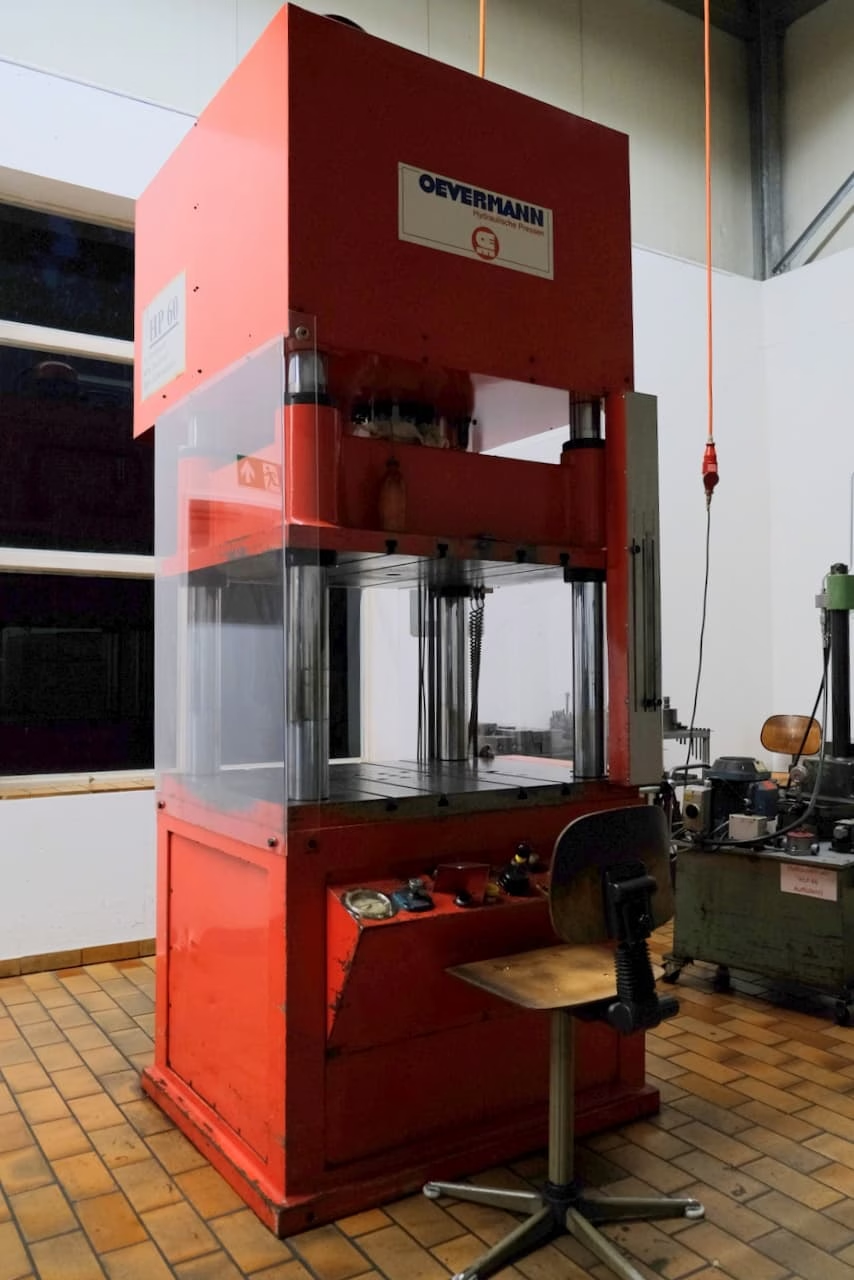
60 Tons | Oevermann
Clamping force: 60 tons Core-pulling force: 20 tons

100 Tons | Hans Schoen
Clamping force: 100 tons Ejector force: 40 tons 100 ton hydraulic press by Hans Schoen for stamping, bending
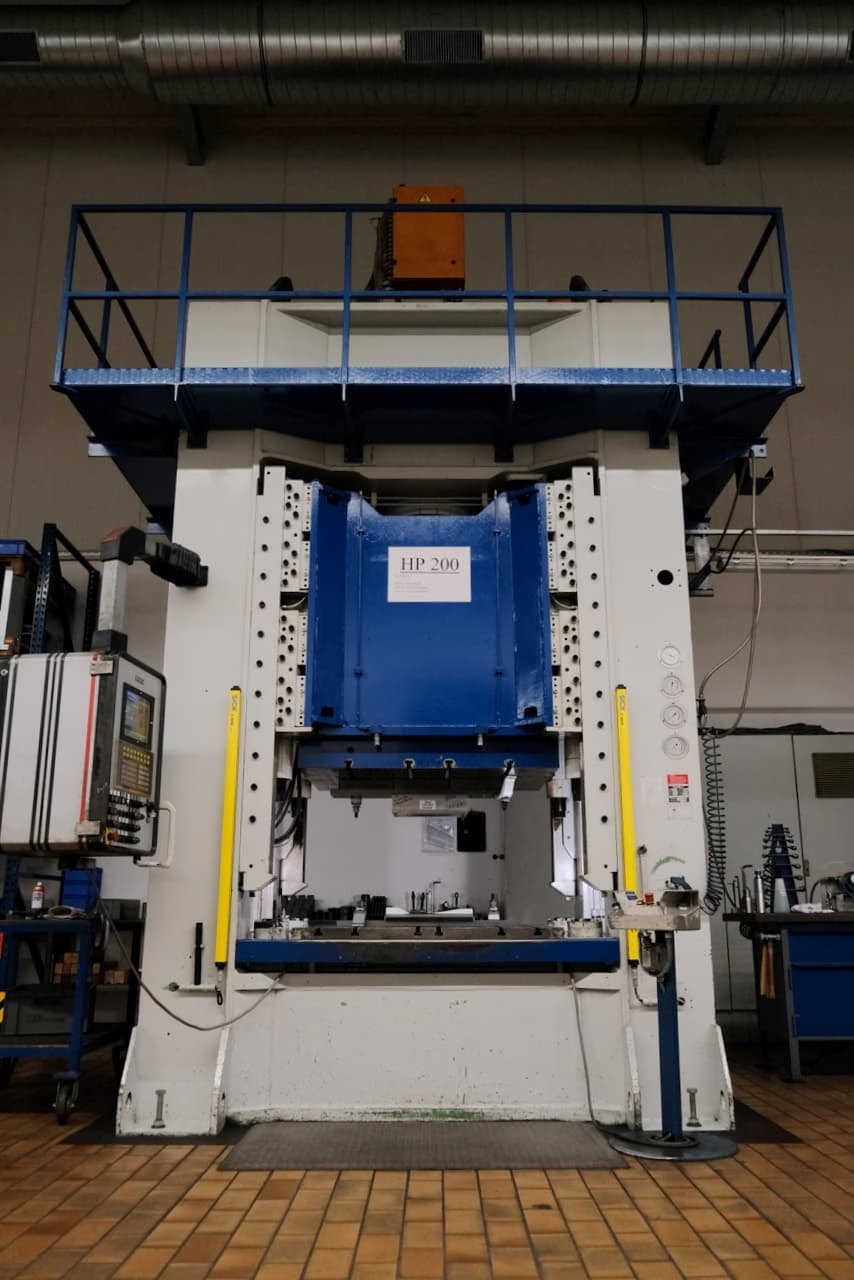
200 Tons | Hydrap
Clamping force: 200 tons, Core pull force: 100 tons, Ejection force: 63 tons
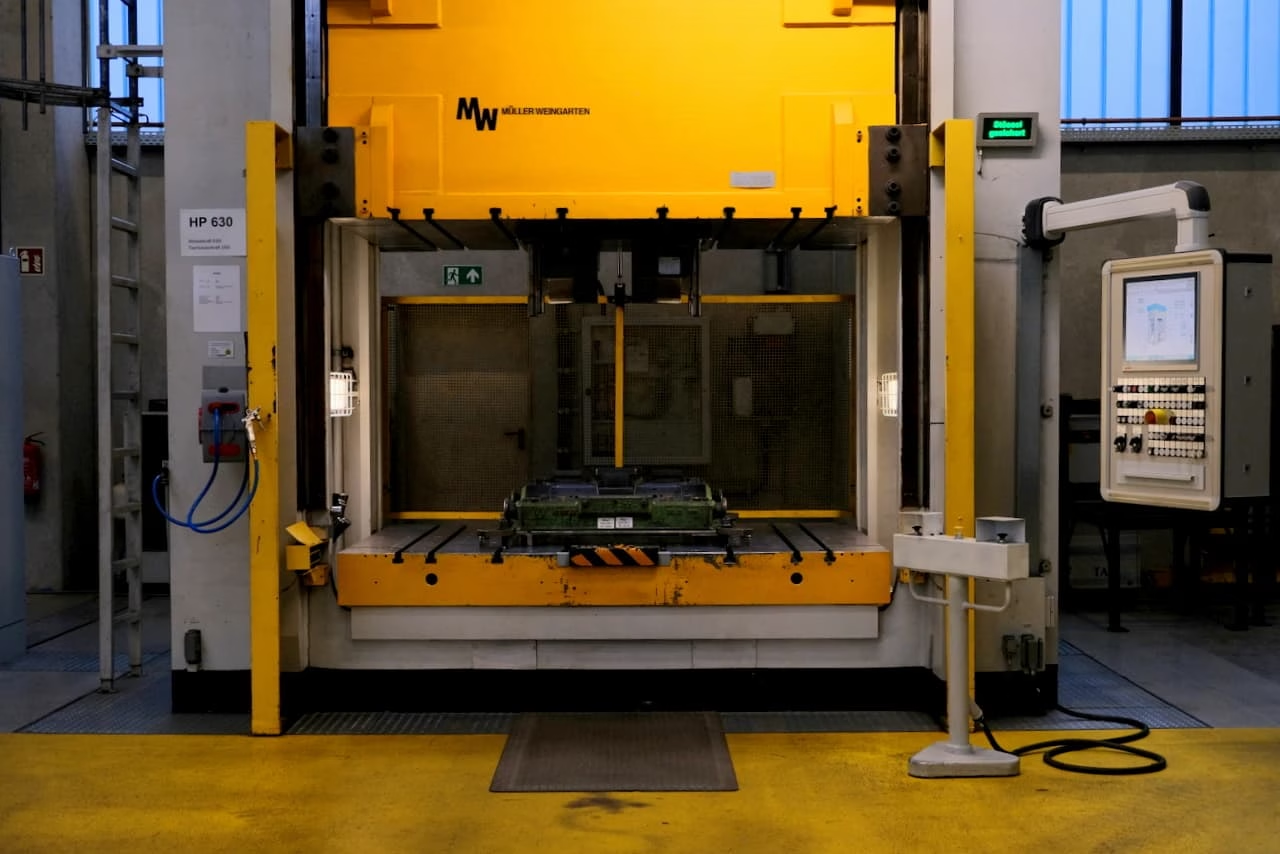
630 tons | Müller Weingarten HP630
Müller Weingarten hydraulic press with 630 tons of pressing force and drawing cushion for large-area forming parts with high
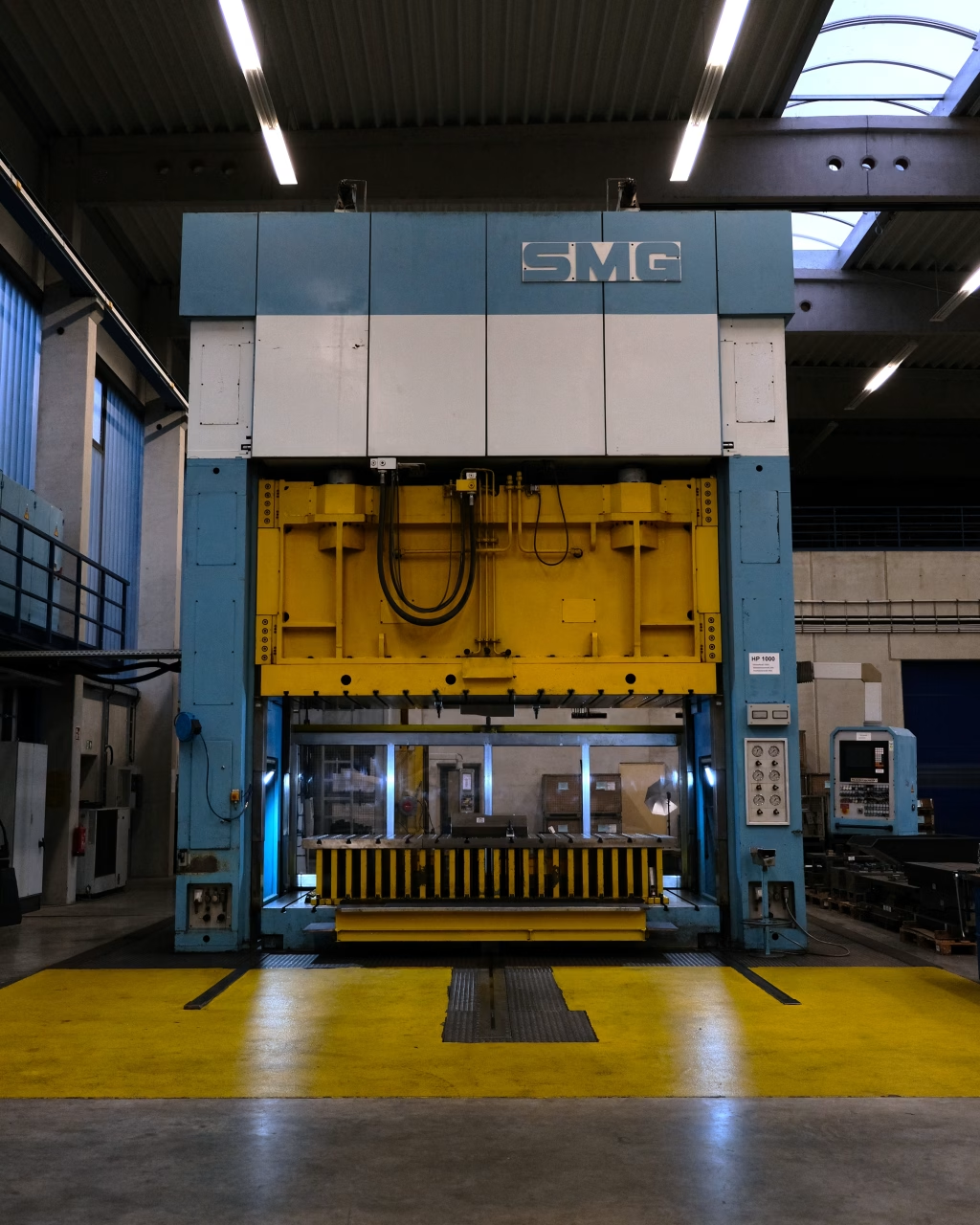
1000 tons | SMG HP1000
Pressing force: 1000 tons Forming area: 5,000 x 2,200 mm Coil width: 1,700 mm
 German
  English